
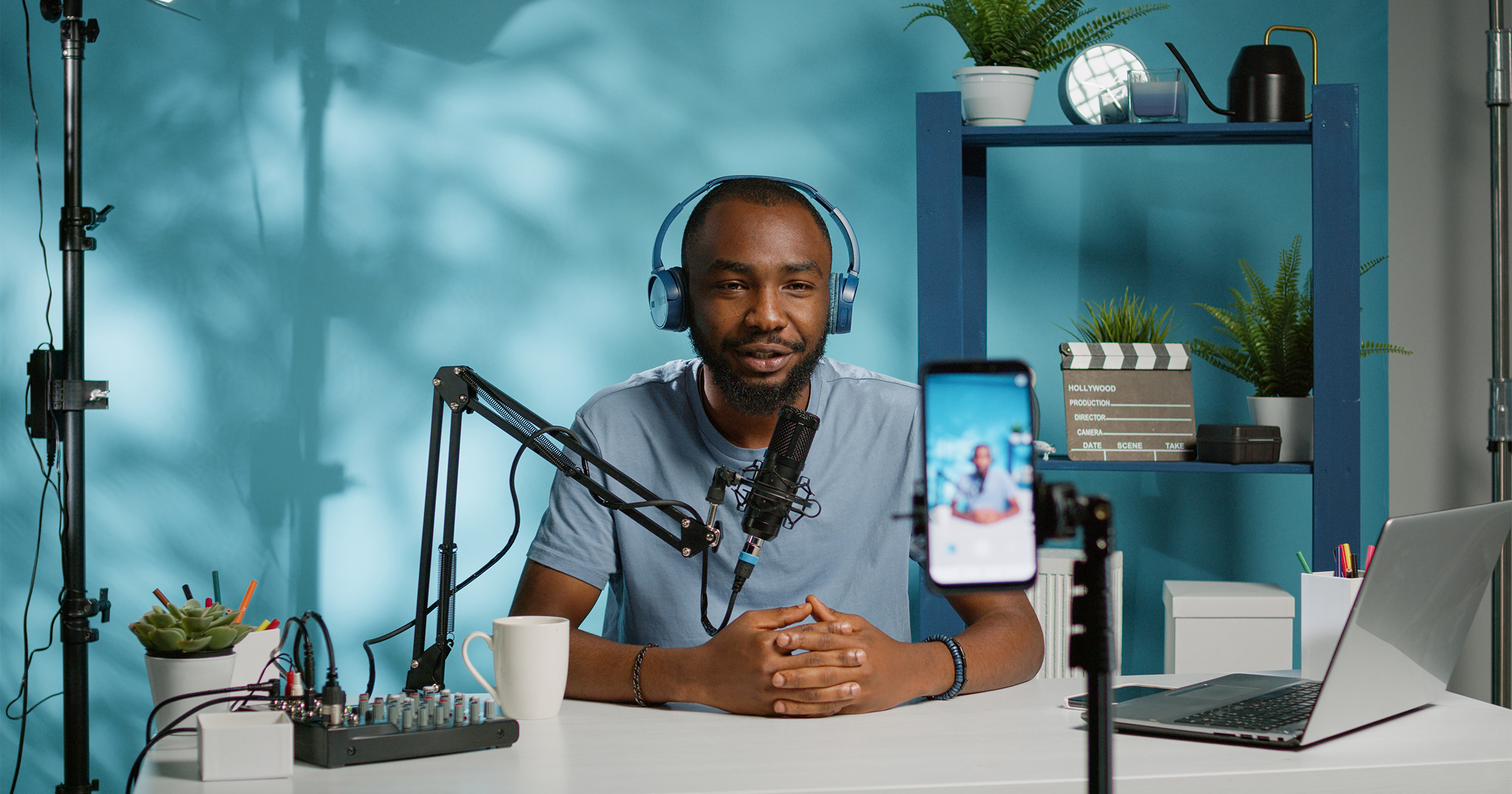
Let’s start from the beginning: in the last two months the hashtag deinfluencing has gone viral on TikTok, reaching to date over 200 million views. Deinfluencers are creators who publish videos in which, unlike influencers, they advise users what not to buy or not to use.
Can brands react to this trend by adjusting their behaviour on social media?
Although many of us still struggle to admit it, today almost everyone who has used the Internet has been influenced. TikTok, Instagram, Twitter, Twitch, Facebook, YouTube (and even news sites and online magazines) are full of suggestions that encourage some form of economic transaction.
When we’re lucky, the closeness between the “influencer” and the advertised product is real and motivated by sincere beliefs, passions or interests. When, instead, the collaboration is more obviously prompted by the brands, the result can be fake and rather far from the naturalness of normal social interactions.
In this by-now very saturated context, it is inevitable that many users end up annoyed or even disappointed. A feeling that arises as much from the excessively promotional environment that has been created as from the results of the products they have actually bought.
And so here comes deinfluencing, the trend that encourages users not to buy a certain product (because it’s superfluous or ineffective), invading TikTok.
Why deinfluencing was (re)born
It is actually a phenomenon already seen: in 2015, on YouTube, videos with similar intentions proliferated (which at the time were called anti-haul).
The current wave of virality (more evident given the space that online shopping has gained) seems to respond to a set of concurrent factors.
First of all, users’ awareness of the mechanisms (by now not even that hidden) that govern collaborations between brands and influencers/creators has grown enormously. And so has the ability to spot non-transparent relationships or cases of misleading advertising by some influencers. The case that recently caused the biggest stir was that of Mikayla Nogueira, a make-up artist with 14.4 million followers. After sponsoring a mascara, she was in fact accused of wearing false eyelashes to accentuate the product’s effect. Cases like these end up undermining the trust between the influencer and their community, and putting the entire influencer marketing system in a bad light.
Deinfluencing seems to have regained ground in recent weeks also because of the economic context that surrounds us. From Europe to the United States, the energy crisis and inflation, combined with the consequences of the pandemic and the war in Ukraine, have made public opinion increasingly sensitive to the flaunting of the luxurious lifestyle of some influencers.
@michelleskidelsky Replying to @krishateresa 🫡🫡 my bank account hates me, save yours while you can #deinfluencing ♬ original sound – michelle
But it’s not only the economy that triggers deinfluencing. This is also a response to the way TikTok itself has changed, opening up to the massive arrival of influencer marketing.
Last November, TikTok launched in the United States the new TikTok Shop, which allows users to make purchases directly on the app. Creators earn a commission on every purchase by linking the Shop’s products in their videos.
The new feature caused a sudden increase in brand-sponsored content on the platform. At the same time, a huge number of videos appeared in which users show off their purchases admitting that #TikTokMadeMeBuyIt, annoying, however, another segment of users.
In an interview with Wired, Charlotte Palermino, CEO of a US cosmetics brand very popular on TikTok, said: «A few years ago TikTok seemed so authentic because most users didn’t take themselves seriously. Brands weren’t investing much in creators. It was a fun space, almost free of external pressure. Now, instead, the pressure has reached boiling point.»
Deinfluencing: ethics or profit?
So while the theoretical intentions behind these activities can be read as a real reaction to the excess of consumerism increasingly widespread on social media, many commentators have pointed out that the deinfluencing methods are, in fact, the same ones practised by established influencers. “Ordinary” users and creators use their voice to influence the purchasing decisions of their audience, large or small. The practice has simply been adapted to align with consumers’ feelings during a period of economic crisis.
Moreover, going along with the trend and publishing critical reviews can help users gain popularity (and even turn a hobby into a semi-professional activity, as Alyssa Kromelis — who has essentially become a deinfluencing influencer, building her persona on stating what she does not stand for and what she does not believe in). Conversely, already-famous creators can in this way distance themselves from the controversies that are eroding trust in the influencer sector, getting closer to their community’s expectations.
It is precisely on this last point that the most interesting reflection for brands arises. How to react when an ever-larger share of users shows that they can barely tolerate the most blatant and intrusive promotional activities?
How can brands react?
There is no doubt that these trends, while including contradictory aspects, help to create at least a pause in the consumerist intoxication we experience every day on social media, almost without realising it. A critical stop that prompts a reflection: as consumers, are we aware of how, how much and where we spend our money?
If these are the questions customers ask themselves, both creators and brands should be extremely receptive to the answers and, also, to the possibility of steering market expectations.
The consumers of the future, Gen Z, love TikTok (which in all forecasts is indicated as the main engine that will drive the growth of social commerce sales) and most of them already present themselves as very attentive to the sustainability of their consumption and spending patterns. Unlike past generations, the most influential factor in motivating a purchase is becoming respect for personal, social and environmental principles, rather than price or the status quo.
This is why all brands, regardless of their target market and the generational target they address, sooner or later will have to engage with these demands. Taking a stand and committing, embracing social and environmental causes, or even including in their business model a commitment to causes that go beyond mere economic profit (we talked about it in relation to the Brand purpose put into practice by Patagonia). These are the directions along which brands will have to try to align in order to get closer to the expectations of consumers in the near future.
The deinfluencing trend may fade as quickly as its rise was rapid. But the questions and the growing awareness that generated it can only become increasingly dominant and influential in the commercial dynamics of the future.