
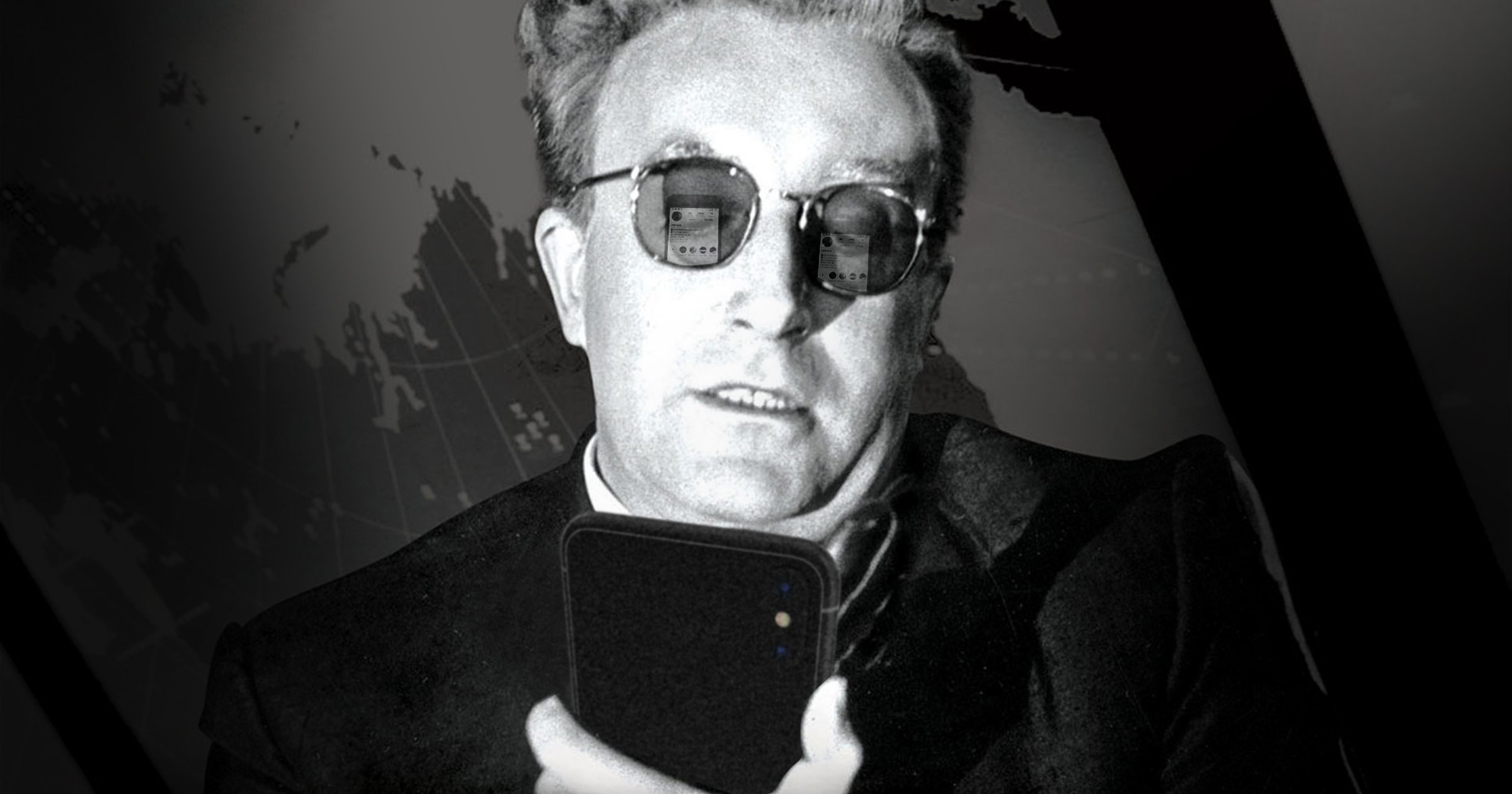
In a field that makes transformation and continuous updating its specific driving force, as is the case with the social media universe, staying up to date on macro and micro social media trends is a priority, both creatively and technically.
It’s true that compulsively indulging every trend (which can be born and die within a single day) can turn into a chase after virality for its own sake, even counterproductive when it comes to establishing a recognisable brand identity. But keeping an eye on what engages many users is important. Intercepting, interpreting, filtering and possibly adapting a trend to a brand’s communication assets is a skill that those who work in Social Media Marketing should always put into practice to offer added value.
Responsibility and awareness: beyond «Social Media whatsit…»
Those who work full-time in Social Media Marketing are finally seeing their professionalism recognised (despite some trivialisations, even high-profile ones, as recently happened on the Ariston stage). Despite the uncertain times, many social marketers find themselves in a position of relative security and, above all, responsibility. They have at their disposal larger slices of the overall marketing budget and can carve out greater authority over their own work.
Precisely for this reason, these professionals will increasingly be called upon to demonstrate that their choices are the result of a structured strategy planned for the medium-to-long term. And that they are fully aware of the messages and stances they can convey, rather than being tied to a series of actions and “micro-tactics” aimed at racking up views and likes.
Those who do so will consolidate their value once and for all.
Before highlighting some of the main directions that communication on social media is taking, a premise.
Why, if we deal with communication across the board, is attention so often focused on social media? As highlighted by several industry reports, after the pandemic years Italians are gradually decreasing the daily hours spent online, except for social media. Today people spend more than 2 and a half hours a day on social platforms (on average 40 minutes more than the time devoted to television). What happens on social media, therefore, continues to influence behaviours, ways of connecting with others, choices of entertainment and decisions about online purchasing.
Reels, TikTok, Shorts: the important thing is that it moves!
OK, we’re certainly not announcing anything new, but it’s always worth reiterating. On all social platforms, from those on the launchpad to conquer the world (TikTok) to spaces that have been active for over 10 years now, short vertical-format videos will reign supreme, in terms of views and engagement results. They will be the format favoured by the platforms themselves (just look at the latest update in the search bars of the Facebook and Instagram apps, with Reels prominently on show), including when it comes to sponsored content.
Sure, they involve more effort to produce. Sure, they often require you to stay up to date with the latest trends (music, editing, effects). But the return in terms of results is definitely worth the effort.
Social media trends will drive online search
We are used to considering social media as being in competition with each other (and indeed they are, considering the innovative features that the platforms periodically copy from one another). We are less used to thinking that these spaces are, in fact, eroding the ground that until very few years ago was the domain of search engines, especially when it comes to younger people.
And it’s Google itself that admits it. A recent report shows that 40% of users aged between 18 and 24 already use social media today (mainly TikTok) as their main search engine, for practically any purpose (we wrote about it here too).
Some have even gone so far as to claim that TikTok is literally “eating the Internet”.
Furthermore, a Hootsuite study has established that choosing optimised keywords as captions, instead of hashtags, increases the findability of your content by 30% and even goes so far as to double engagement.
But what does this trend mean for those who work with social media?
That the time has come, instead of pasting a few hashtags into the copy after the post has been published, to refine the search for strategic keywords (i.e. topics that are already being searched for by users on social media) to include in your content, so as to add a very promising traffic channel to your channels.
Crossposting? No thanks!
Impossible to deny: in recent years it has happened that we’ve had to set aside our focus on strategy to concentrate on the continuous re-adaptation of content, very often precisely to chase the evolutions of social media trends. Each platform has released continuous updates, new formats, features “inspired” by those of the most popular competitors. We have thus arrived at a paradoxical situation: more platforms, but a clear trend towards their homogenisation.
All this has given ever more strength to cross-posting, that is, posting the same content in parallel on multiple social media. There is no doubt that this strategy helps to save time and optimise efforts, as well as fostering a more consistent transmission of information.
Its frequent overuse, however, prompts us to ask ourselves: have we forgotten that users are present on multiple channels, but use them differently and with explicitly different goals? Over 84% of TikTok users are also on Facebook, and almost 88% of Twitter users are also on Instagram.
According to a Hootsuite study, only 18% of marketers systematically create different posts for each platform. However, when they do, it makes them far more confident in the value of that content.
The desirable trend is therefore to invest more time in exploring the channels suited to your business goals, rather than trying to keep up with every change (read: homogenisation) that the networks propose. This does not mean banning experiments on new ground, but avoiding charges dictated by the anxiety of “being there”, replaced by a reflection on the tone of voice and the distinctive content to offer on new broadcasts. One example above all: the ironic and irreverent TikTok account of the Washington Post, a very authoritative and institutional newspaper on other communication channels.
Creators and the boost of social media trends
The institutionalisation of influencers and creators is now there for all to see. But how many companies really invest in it? Far fewer than you might think.
Despite their media exposure, the use of Content Creators in corporate communication strategies still marks a transitional phase: again, Hootsuite tells us that, while 42% of companies with over 1,000 employees collaborate with creators, only 28% of small businesses do so. The main obstacle concerns the lack of standardisation of costs, which leaves small entrepreneurs disoriented and often without guidance in negotiating a price that makes sense.
A difficulty that could undoubtedly be avoided thanks to collaboration with agencies, specialised precisely in the relationship of intermediary between brand and creator. But only a third of the companies active in this type of activity do so.
Integrating Creator Marketing into your strategies, however, is a an increasingly important investment for brands. The social media trends we have talked about arise, in almost all cases, from the spontaneous creativity of users, which is appreciated and therefore goes viral. Entrusting promotional messages (suitably in line with the sector, style and target audience of a specific creator) to a user who is popular on social media (not necessarily an influencer with millions of followers) means introducing your brand into the flow of a community’s “organic” conversations, mixing commercial suggestions and inspirations with what users already consider interesting or fun.
New Social Media Strategies for the ceramics sector
In a context like the one described above, VENTISETTE Digital continues to innovate and update its approach to online communication.
In the ceramics sector, for example, this year too we have confirmed our partnerships with players in the sector who aim to oversee their digital ecosystem in a proactive, correct, competitive and complete way.
Terratinta Group
For Terratinta Group’s e-shop, for example, we started from a data-driven approach to the sector to build a content and format strategy based on real information. This, correctly combined with the client’s sensibilities and experience, guided us in formulating effective, customised strategies based on the goals requested in the area of Social Media (META in particular), SEO content and Google Ads for the Italian market.
Keradom Srl and Maltha Design
For Keradom Srl or Maltha Design, on the other hand, we committed to periodically renewing — in managing the content that makes up the social Editorial Plan — the style, the creative work and the treatments of the formats already implemented in the editorial plan.
Staying consistent with the content already developed and available on the brand’s channels, which contributes to the company’s recognisability in the eyes of users, we carried out a restyling of the creative work for 2023 as well. This activity will help to bring what already exists closer to the new emerging trends and to adapt it to any new strategic priorities of the brand, as well as to always show ourselves attentive to new developments and open to healthy change.
Infinity Surfaces
For Infinity Surfaces, finally, in addition to overseeing the brand’s positioning in the Italian market in SEO, Google Ads and Social Media (content + advertising), we ourselves went on to develop new content for the brand to cover the entire year, making the company showroom an important asset to leverage in this area.
Photographs and videos of quality, created with the destination in mind and edited with an eye on the trends of the moment (rhythmic editing, music, content trends) thus “open a window” onto the most internal universe of the company. Almost as if users were invited inside a home, the showroom spaces will be used by the agency in a functional way for other types of format too, such as the setting for events, for social columns with guests, for the creation of carousels and videos for Instagram reels.