
Blurry selfies, messy photo dumps, cryptic memes: why have all the feeds become “ugly”? Welcome to Gen Z’s Instagram.
“Those born in ’89 have digital SLRs, they put nice black-and-white photos on Flickr” sang Niccolò Contessa / I Cani in 2011.
Today we could reply: “Those born in ’99 have smartphones worth thousands of euros, they put blurry selfies and random photo dumps on Instagram”.
Picture yourself scrolling, just a few years ago, through the Instagram feed of your favourite influencer/actor/musician. You might have admired their luxurious hotel room, their glossy photo shoots or the perfectly laid-out breakfast table (strictly with avocado toast and a special cappuccino).
Do the same thing now. You’re more likely to see carousels with flash-lit photos of fast-food trays, a car’s number plate at random, rubbish in the street, selfies taken against a dirty window. What happened?
The years of the uncontested dominance of the so-called Instagram aesthetic — made of pastel colours, glossy, post-produced photographs, exclusive locations, coordinated and highly curated feeds — are over. The Millennials have passed the baton to a new generation, Gen Z, those born after 2000, who have decided to deliberately seek out the opposite style.
Gen Z and Instagram’s “weird and ugly” era
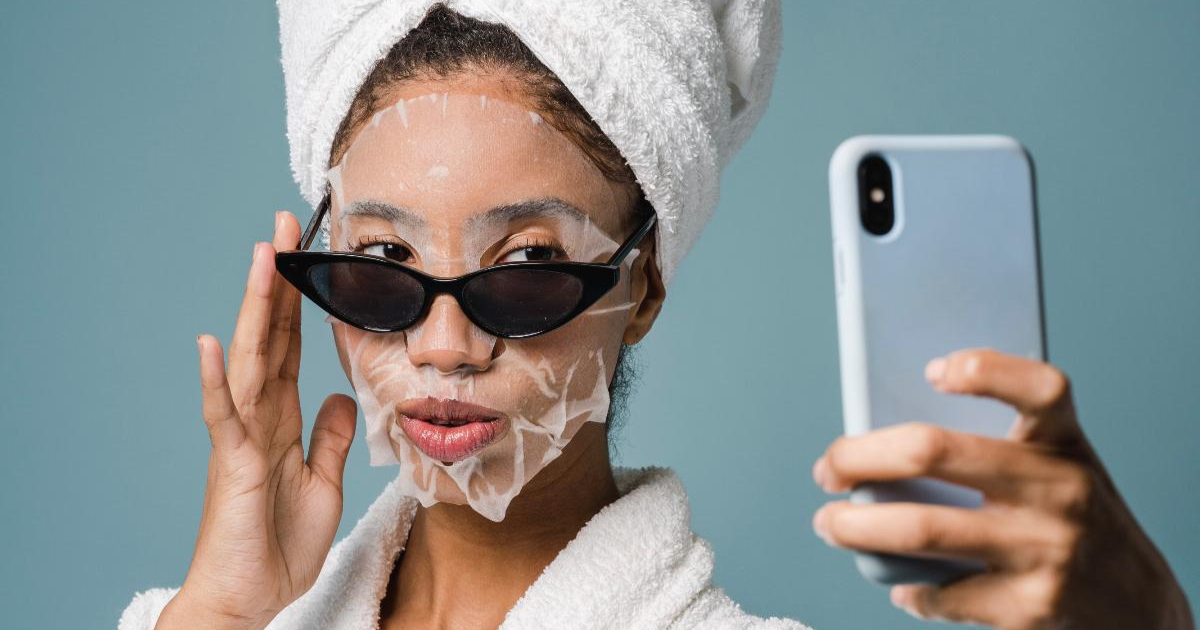
True digital natives, savvy to the point of recognising every hint of artificial retouching, the young people of Gen Z on Instagram prefer spontaneous shots almost always taken with a smartphone. They don’t shy away from blurs, missed focus or details cut off. Posts are often published on impulse without any planning and with no apparent connection to the other images in the same carousel or feed. An attitude that would have made the Millennials — obsessive about respecting the colour palette — shudder, but which today fits perfectly into the photo dump phenomenon. A set of images disconnected from each other, except for the general (self-)ironic tone and the desire to communicate more a mood than a single piece of information. Shots that represent moments of real life rather than alterations due to filters or heavy editing.
A trend that seems to have been born in the years of the global lockdowns caused by the pandemic. Months in which the time spent on social networks had increased dramatically, but in which everyone could only document the normality of their own domestic lives.
Some have spoken of the birth of a new weird and ugly aesthetic. Perhaps even the reflection of a real evolution in the way we use the internet. The young people of Gen Z, driven and indulged by TikTok and BeReal (which we also wrote about here) which value spontaneous and personal content, no longer seem to have any interest in an idealised aesthetic. Instead, they place ever more value on authenticity, sought out even in its most trivial details.
It’s worth pointing out that the anti-aesthetic is not only a trend visible on Instagram. “Ugliness” is everywhere, from the rediscovery of the mullet haircut to the success of visibly amateur knitwear and the “Crocs renaissance”. A few months ago a trend even went viral that consisted of recreating eye bags on TikTok.
Instagram and imperfection: what future for brands?
Considering the anti-aesthetic trends that Gen Z is showing, social media will have to change their skin to survive. And if they choose to indulge these demands by guaranteeing new spaces for the expression of individualities, what will be the role of brands on the platforms?
Today it is often perceived as excessively pervasive, especially at the expense of the content of “ordinary” users. To be re-accepted by users, it will have to be rethought to favour a humanised communication, spontaneous and, above all, more tied to the expression of values and commitment than to the offering of products to buy.
A trend — that of Gen Z on Instagram — that is intentionally anti-aesthetic and based on irony, immediacy and a certain anarchic spirit is certainly more difficult to recreate for commercial purposes. But, if indulged in the right ways, it guarantees a brand the achievement of an inimitable personal signature. A result achieved thanks to a tone of voice that comes close to the way users communicate and makes the brand “humanised” and unmistakable.
Among the examples of those adapting to this new way of communicating is the beauty brand Glossier. Alongside more classically “product” photos and videos (which nonetheless move away from the glossy Instagram aesthetic), here is a mix of memes, natural close-ups, semi-blurry user selfies and, recently, the video of a relaxed little pig having a bath.
And influencers and celebrities too have understood that this is the direction to move in. Just look at these messy photos of model Bella Hadid or a carousel by singer Dua Lipa in Chile, put together as if she were an ordinary tourist. Or this post by actress Emma Corrin, who alternates her red-carpet look with blurry selfies with friends.